




Does your website really reflect and represent everything you and your company are capable of? Are you proud to share it with clients and prospects, or do you cringe a little at the running list of things you wish you could improve?
Breathing new life into a website that feels outdated or underperforms is no small task. It can take a real mix of time, energy, and the help of people who do this every day. The good news is that a strong redesign almost always starts the same way, with a few honest questions about where you are and where you want to go.
Before you settle on a template, a color palette, or an agency, work through the five questions below. They will help you find your starting point, define what the finish line looks like, and avoid the most common reason redesigns disappoint: starting with design before strategy.
Question #1: What are your goals?
Most companies have a specific reason for redesigning, and naming that reason early shapes every decision that follows. We think of it as the spark. When you know what pushed you toward a refresh, you can measure the finished site against something real instead of a vague sense that it should look better.
A few of the sparks we hear most often: the site feels outdated, it comes across as unprofessional, it has fallen behind competitors, or it simply is not generating the traffic and conversions you need.
Outdated is the common one. Technology and design trends move quickly, and a site can start to feel dated within a few years. As your company grows, your website can also drift out of step with your current offerings, services, team, and values.
An unprofessional impression is just as costly. Maybe the first version was a DIY project, or it was rushed out the door with plans to finish it later. Missing, unreadable, or hard to find information leaves the wrong impression on exactly the people you most want to win over.
Falling behind competitors matters too. If the businesses you compete with have a more inviting or more effective online presence, that is a fair signal it is time for a refresh. And if the site is not generating the leads you expected, a redesign is your chance to realign it with your marketing goals.
Whatever your spark, get specific. More leads is a fine start, but a clear path for a prospect to book a consultation is a goal you can actually design and measure. If you are not sure how to turn a broad wish into measurable outcomes, our guide to conversion objectives can help you frame it.
Question #2: What is and isn’t working on your current site?
Once you know why you are redesigning, take a close look at what you already have. A redesign is rarely a reason to throw everything out. Some parts of your current site probably work well, and knowing which ones protects what performs and saves you money. It helps to go element by element.
Copy. Do you like the tone and style, and is there too much text or too little? Your words should tell readers who you are, what you do, and how to reach you. As a rule of thumb, try not to trade clarity for cleverness. If the writing feels thin, our post on presenting content effectively is a good place to start.
Design. Does the layout guide the eye, or does it feel cluttered and hard to read? Your site should be easy to skim and navigate, with a natural flow from one section to the next, and it should stay consistent with your branding.
Calls to action. Are you clearly asking visitors to take a next step, and are you making it easy for them to follow through? If you want more consultations booked, that action should be obvious on the page. Small changes to wording, color, and placement add up, and our guide to building a strong call to action page digs into how.
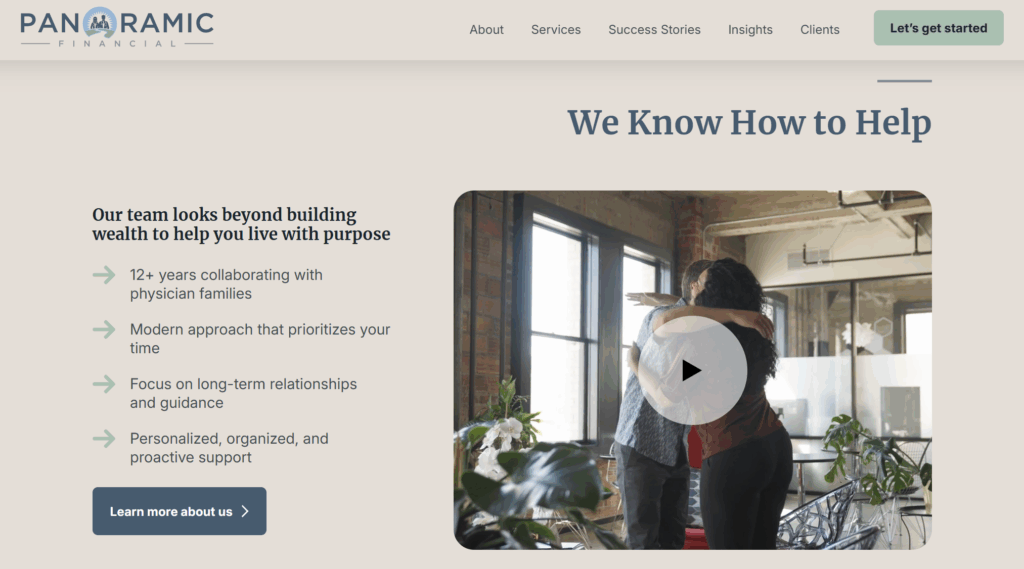
Additional components. Think about the extras that give your site personality and build trust. Panoramic Financial, for example, uses videos, custom photography, FAQs, forms, and success stories to give visitors a personable look inside the firm.
Question #3: Who is your audience?
Here is the question people skip most often. We are talking about your company’s website, but the opinion that matters most is your audience’s. If the site does not attract the right people or speak to what they care about, it is not doing its job, no matter how much you happen to like it.
If you have not done this lately, set aside time to define your target audience and their biggest pain points. What are they trying to solve, and how do you position yourself as the answer? Your site should be built to attract your ideal clients and address their needs, even when that differs from your own taste.
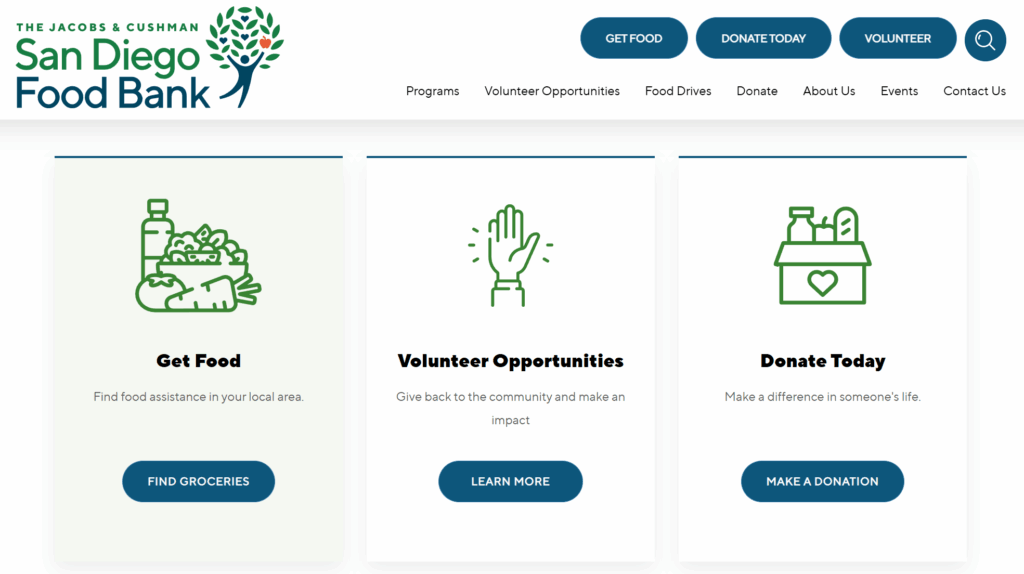
Sometimes you are speaking to more than one group at once. The San Diego Food Bank serves three primary audiences and makes it simple for each visitor to find the information that applies to them. If that sounds like your situation, our post on appealing to multiple audiences walks through how to structure it.
Question #4: What are your competitors doing?
Competitor research should not drive your whole redesign, but it is worth seeing what others in your space are doing, and more usefully, what you like or dislike about their sites. You are not trying to copy anyone. You are looking for ideas and for gaps you can fill better than they do.
Keep one caution in mind. You cannot see your competitors’ conversion rates, traffic, or lead numbers. A site that looks more polished is not necessarily converting better, so borrowing from it may not move you toward your goals. That is why your own goals and your ideal client’s needs come first, and competitor research comes second.
Question #5: Who should you hire to help?
The right partner is the difference between a redesign that looks nice and one that actually performs. A strong partner takes time to understand your goals, get clear on your audience, and bring your vision to life, all while building a site that is technically sound and optimized for search.
As you compare candidates, ask how they handle strategy before design, and how they approach content, accessibility, and search. Ask how they measure success after launch, and ask to see work for companies like yours. Pay attention to whether they ask you good questions in return, because a partner who leads with your goals rather than their templates is usually the one worth hiring. If you want to see how a structured engagement unfolds, our overview of professional website redesign lays out what to expect.
Frequently Asked Questions
How do I know if I need a website redesign?
The clearest signals are a site that looks or feels dated, one that no longer reflects your current services, or one that is not generating the leads and conversions you expect. If visitors struggle to find key information, or your site looks weaker than a competitor’s, those are practical signs. Weak search traffic, or a lot of visitors who leave without taking action, are worth watching too.
What questions should I ask before redesigning my website?
Start with the five in this post: what are your goals, what is and isn’t working now, who is your audience, what are your competitors doing, and who should you hire. Answering these before you talk about layouts or colors keeps the project focused on results rather than aesthetics alone.
How long does a website redesign take?
It depends on the size of the site and the scope of the work. Once you account for planning, content, design, development, and review, most professional redesigns run from a couple of months to several. The clearer your goals and content are up front, the smoother the timeline tends to be.
How much does a website redesign cost?
Cost varies with the number of pages, the complexity of the design, and features like ecommerce, custom functionality, or integrations. Rather than anchoring on one number, tie your budget to the goals you set in question one, since those goals determine the scope. A short consultation is the fastest way to get a realistic range for your project.
Where should I start with a website redesign?
Start with strategy, not design. Define why you are redesigning and what success looks like, audit what already works on your current site, and get clear on your audience. Those answers shape every design and development decision that follows, and they prevent expensive rework later.
How often should you redesign your website?
Many businesses refresh major elements every few years, but there is no fixed rule. Instead of redesigning on a schedule, watch for the signals that matter: outdated design, a mismatch with your current services, or slipping performance. Regular smaller updates can extend the life of a site well beyond its launch.
Ready to start your redesign?
Your website is one of the most powerful, forward-facing assets your company owns. If it does not clearly show who you are, what you do, and how you help the people you serve, it may be time to hit the reset button this year.
From clear, concise content to engaging and accessible design, we are here to help you take this on with confidence. Let’s start with a free web consultation to talk through your goals.